ACL Tear Recovery Timeline: Month-by-Month After Surgery
Month-by-month ACL reconstruction recovery timeline — what to expect at each stage, MRI signal evolution, return-to-sport milestones, and red flags.
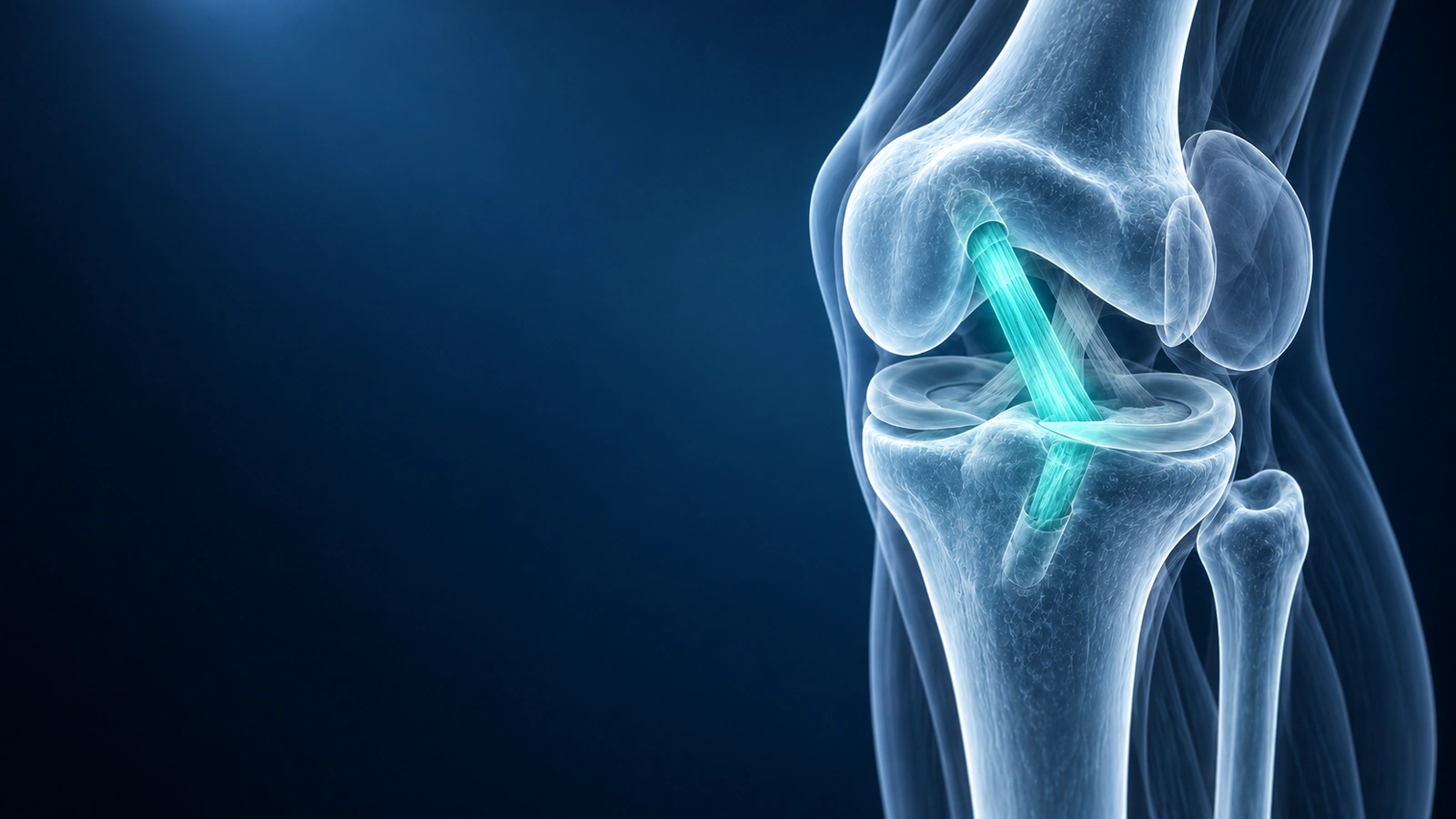
ACL reconstruction is a significant surgical procedure, and the road back to full activity is measured in months, not weeks. Most patients return to sport between 9 and 12 months — sometimes longer — and the research is clear that returning too early substantially raises re-rupture risk. Understanding what happens at each phase helps you set realistic expectations, recognize normal MRI findings, and spot genuine red flags that warrant a call to your surgeon.
The timeline below reflects standard patellar tendon and hamstring graft protocols. Your surgeon may adjust milestones based on graft choice, fixation method, concomitant procedures (meniscal repair, cartilage work), and your individual biology. Use these phases as a framework for conversation with your physiotherapist — not as a personal deadline.
Weeks 0–2: Protection and Swelling Control
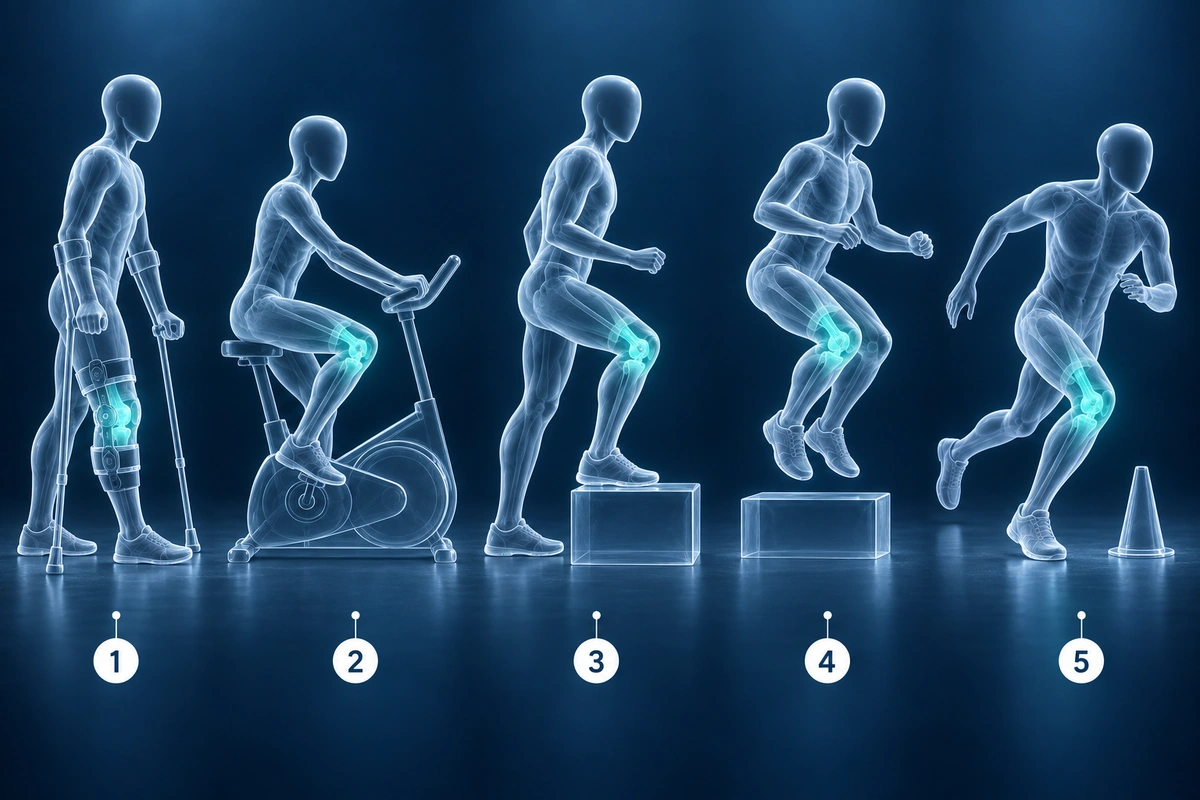
The first two weeks are dominated by managing post-operative swelling, pain, and early range-of-motion restoration. The immediate goals are full passive knee extension (0°), flexion to 90°, quad activation, and safe weight-bearing with crutches. A hinged brace is typically worn to protect the graft during ambulation. Ice, elevation, and compression are used aggressively. Straight-leg raises and quad sets are the mainstay exercises. Walking, stairs, and prolonged standing are restricted.
On MRI obtained in this window, the graft appears bright and edematous on T2-weighted sequences — this is expected and does not indicate failure. The graft tunnels show surrounding edema and the graft itself has high water content reflecting surgical trauma and early revascularization. Red flags at this stage include gross instability, fever above 38.5 °C, rapidly increasing calf pain (DVT), or wound drainage beyond the first few days.
Weeks 2–6: Gait Normalization and ROM Recovery
By week two, most patients transition to full weight-bearing. The brace is progressively weaned as quadriceps control improves. Rehabilitation shifts toward restoring full passive range of motion (0–130° or beyond), normalized gait pattern without a limp, and gentle closed-chain strengthening such as mini-squats and leg press at shallow angles. Stationary cycling with low resistance begins around week four to six, providing cardiovascular maintenance without graft stress.
MRI during this phase still shows the graft as intermediate-to-high signal on T2 images. This reflects ongoing revascularization — new blood vessels are growing into the graft — and is not pathological. Bone tunnel widening may begin to appear on imaging; this is a recognized phenomenon (particularly with hamstring grafts and interference screw fixation) and is not always associated with clinical laxity. Persistent severe swelling, inability to achieve full extension, or a locked knee are red flags requiring clinical reassessment.
Months 1.5–3: Strengthening and Early Agility
This phase introduces progressive strengthening — single-leg press, step-ups, Romanian deadlifts, and hamstring curls at tolerable loads. Stationary cycling at higher resistance is standard. Light straight-line jogging on a treadmill may begin at 10–12 weeks in some protocols, subject to full ROM, normal gait, and adequate quad strength (typically ≥70% limb symmetry index on isokinetic testing). Proprioception and balance training on unstable surfaces begin in this window.
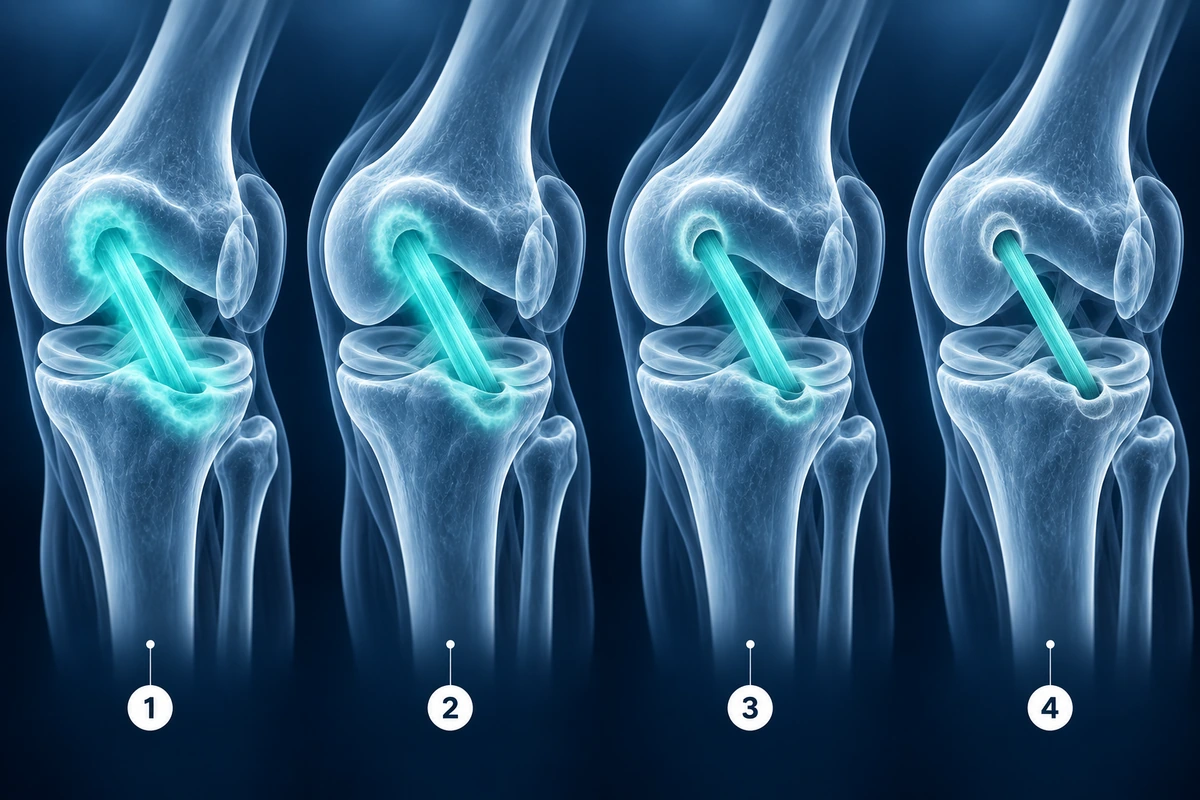
The graft is in the early ligamentization phase — the process by which the body remodels the transplanted tissue into a structure resembling native ACL. MRI signal begins to decrease from the peak edema of the first weeks but remains above that of a native ligament. The graft is biologically at its weakest point during months 1–3 (often called the "ligamentization valley"), making this a critical period for protecting against high-load pivoting. For a broader discussion of whether the ACL can heal conservatively, see our article on whether ACL tears heal without surgery.
Months 3–6: Sport-Specific Conditioning and Plyometrics
By month three, rehabilitation progresses to jogging, lateral shuffles, and sport- specific movement patterns — provided the patient passes functional milestones (full ROM, no swelling after exercise, adequate quad and hamstring strength). Double-leg plyometrics (box jumps, broad jumps) are introduced, followed by single-leg plyometrics as strength catches up. Agility ladders, cone drills, and direction-change work begin in the latter half of this phase. Neuromuscular control and landing mechanics are emphasized to reduce the biomechanical risk factors that led to the original injury.
MRI signal in the graft approaches that of a native ligament by months 4–6, though complete ligamentization on histological grounds takes 12–24 months. Bone tunnel widening that was present earlier often stabilizes or partially fills in. Patients who experience recurrent effusion, clicking with pain, or sudden giving way during this phase should be evaluated promptly — a new meniscal injury or early graft failure are possibilities. For detailed guidance on structured rehabilitation exercises in this phase, see our article on knee physiotherapy after ACL surgery.
Months 6–12+: Return-to-Sport Clearance
Return to competitive sport is a decision, not a calendar date. The criteria-based approach requires: limb symmetry index (LSI) ≥90% on quadriceps and hamstrings isokinetic testing, LSI ≥90% on a battery of single-leg hop tests (single hop, triple hop, crossover hop, 6-metre timed hop), full pain-free ROM with no swelling after sport-specific training, and psychological readiness assessed by a validated tool such as the ACL-RSI. Most patients meet these criteria between 9 and 12 months, with some taking longer — and that is appropriate.
The evidence on re-rupture timing is compelling: athletes returning before 9 months have a re-rupture rate four to eight times higher than those who wait until 9–12 months. Graft tissue is fully ligamentized on MRI by approximately 12 months, but histological maturation continues to 24 months. MRI signal in a healthy, mature graft is dark and uniform on all sequences, identical in appearance to the native contralateral ACL. Any new high signal, fiber discontinuity, or abrupt contour change on follow-up MRI should be reviewed with your surgeon, as these may indicate partial or complete re-rupture.
Key Takeaways
- Weeks 0–2: protect the graft, control swelling, achieve 0–90° ROM and quad activation; MRI shows bright, edematous graft — expected, not a sign of failure
- Weeks 2–6: full weight-bearing resumes, gait normalizes, stationary cycling begins; MRI graft signal remains intermediate and bone tunnel widening may appear — both are normal variants
- Months 1.5–3: the ligamentization valley — graft is biologically weakest; strengthen progressively but protect against pivoting and high-load impact
- Months 3–6: plyometrics, agility drills, and sport-specific conditioning; MRI graft signal approaches native ligament; recurrent effusion or giving way warrants evaluation
- Return-to-sport requires LSI ≥90% on strength and hop tests plus psychological readiness — not just a date on the calendar
- Returning before 9 months raises re-rupture risk four- to eight-fold; full graft ligamentization takes 12–24 months even when MRI looks normal at 12 months
Frequently Asked Questions
How long does ACL reconstruction recovery actually take?
Most patients return to unrestricted sport between 9 and 12 months. Basic daily activities and low-impact exercise are typically comfortable by 3–4 months. The variation depends on graft type, concomitant procedures (e.g. meniscal repair adds weeks), individual biology, and how consistently rehabilitation goals are met. Rushing the timeline is the single most modifiable risk factor for re-rupture.
Why does MRI show a bright graft signal when it is supposed to be healing?
High T2 signal in the early post-operative graft reflects edema and active revascularization — blood vessels growing into the graft — not damage or failure. This is part of the ligamentization process and is expected for the first 3–6 months. As the graft matures, signal progressively decreases and the graft appears darker and more uniform, approaching the appearance of native ligament by 12 months.
What is bone tunnel widening on MRI and should I be worried?
Bone tunnel widening refers to enlargement of the femoral or tibial drill holes beyond their original diameter, visible on MRI or CT. It is more common with hamstring grafts and is thought to result from micromotion, synovial fluid ingress, or biological remodeling. Mild-to-moderate widening is common (reported in 20–70% of cases depending on graft type and measurement method) and does not necessarily indicate clinical laxity. Significant widening combined with graft laxity on examination may warrant discussion with your surgeon about fixation options.
What are the return-to-sport criteria after ACL reconstruction?
The most widely used criteria include: (1) limb symmetry index ≥90% on isokinetic quadriceps and hamstrings testing, (2) LSI ≥90% across a hop test battery (single hop, triple hop, crossover hop, 6-metre timed hop), (3) full pain-free ROM with no effusion after sport-specific training sessions, and (4) psychological readiness on the ACL-RSI scale. Time from surgery alone (e.g. "6 months") is not a sufficient criterion — functional testing is required.
What are red flags that suggest the graft has re-ruptured?
Sudden giving way accompanied by a pop, rapid joint effusion (particularly after a pivot or landing), and loss of the firm endpoint on Lachman testing are the classic clinical signs of re-rupture. On MRI, new high signal within a previously dark and mature graft, fiber discontinuity, or a wavy contour are suspicious findings. These should prompt urgent orthopaedic review. Diffuse mild signal increase alone, without clinical instability, may simply reflect normal graft remodeling at an intermediate stage and should be correlated with clinical findings.
Related Articles
Learn whether ACL tears can heal on their own, when surgery is needed, and what conservative treatment options exist.
A comprehensive guide to ACL reconstruction rehabilitation phases, timelines, exercises, and return-to-sport criteria.
Understand ACL tear grading from mild sprains to complete ruptures, MRI findings for each grade, and treatment implications.
Related Conditions
Ready to analyze your imaging? Upload your MRI or X-ray for AI-powered analysis
Upload your MRI or X-ray DICOM files for private, AI-powered analysis. 4 models analyze independently — all data stays in your browser.
Start AnalysisMedical Disclaimer: This page is for informational and educational purposes only. It does not constitute medical advice, diagnosis, or treatment. AI-generated analysis may contain errors. Always consult a qualified healthcare professional for medical decisions. Full Disclaimer