
AI MRI Second Opinion vs Report Explanation
Learn the difference between a licensed radiology second opinion and an AI MRI report explanation, when each helps, and what questions to ask your clinician.
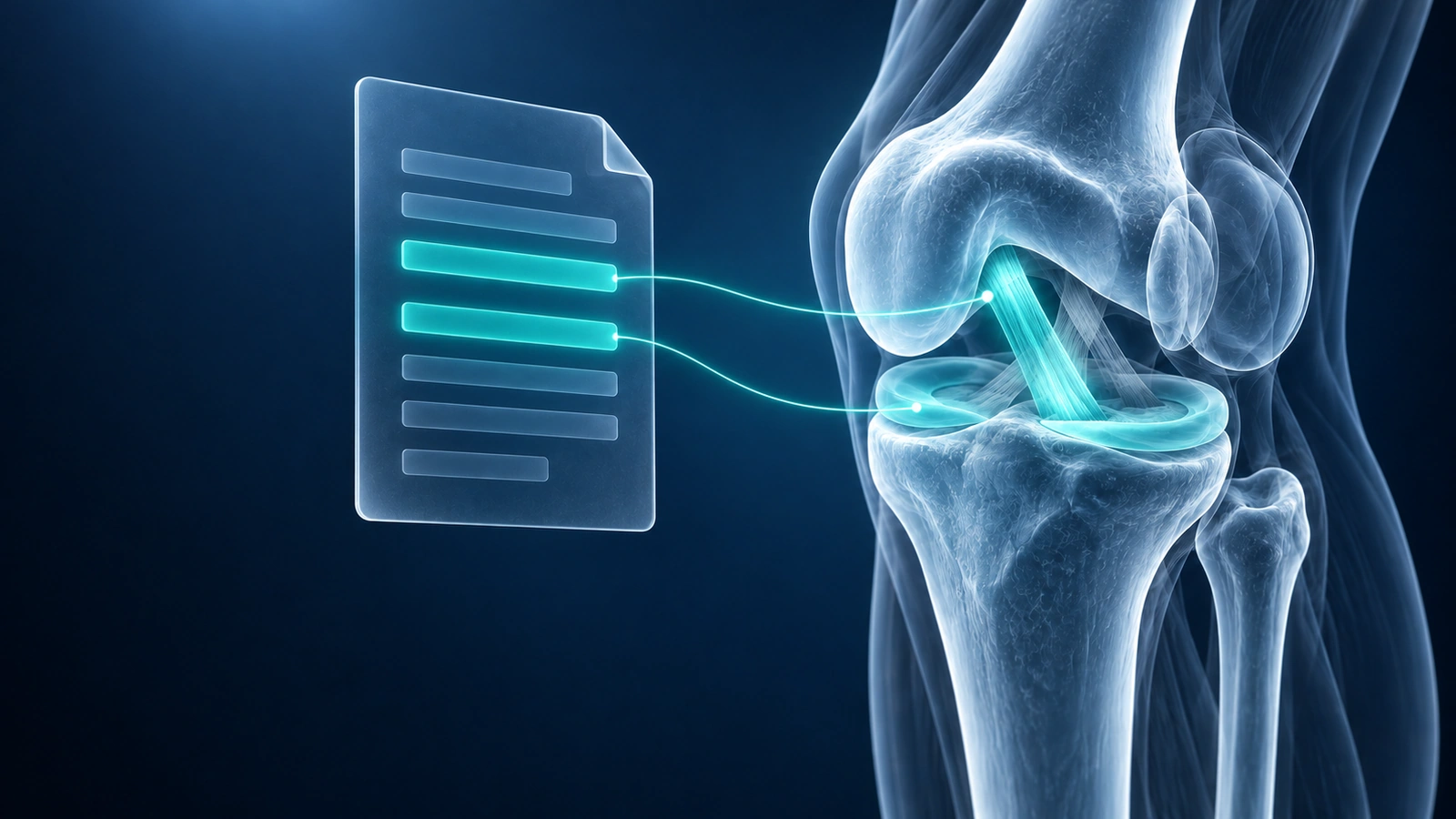
People search for an AI MRI second opinion when they want help understanding a report, comparing findings with symptoms, or deciding what to ask a doctor next. Those are valid needs, but they are not all the same medical service.
A licensed radiology second opinion is a medical interpretation by a qualified physician. An AI MRI explanation is an informational aid that can translate report language, point out anatomy on rendered images, and organize questions for your clinician. The distinction matters for safety, expectations, and search intent.
The Short Version
| Option | What it does | Best for | Limit |
|---|---|---|---|
| Radiology second opinion | A licensed radiologist reviews the study and issues an interpretation | Clinical decisions, disagreement, unclear reports, or treatment planning | Usually paid, slower, and requires sharing the full study |
| AI MRI explanation | Explains report wording and rendered image context in plain language | Understanding terms, preparing questions, and reviewing anatomy | Informational only and not a medical diagnosis |
What a Radiology Second Opinion Means
A radiology second opinion means another qualified radiologist reviews the original MRI images, compares sequences, and writes a professional interpretation. It can confirm the first report, clarify an ambiguous finding, or identify a difference that should be discussed with your treating clinician.
This is the right path when imaging will affect surgery, injections, return-to-sport timing, cancer care, neurologic treatment, or any other meaningful medical decision. A second opinion service may ask for the full DICOM study, the original report, symptoms, prior imaging, and clinical history.
What an AI MRI Report Explanation Can Do
AI explanation is useful when the report language is hard to parse. Terms like “intrasubstance signal,” “partial-thickness tear,” “chondral fissuring,” or “bone marrow edema” can be translated into everyday language and connected to anatomy you can see in the viewer.
It can also help you prepare for a visit. For example, it can turn a long knee MRI report into questions about meniscus tear location, ACL fiber continuity, cartilage wear, swelling, and whether the finding matches your symptoms. That is preparation, not a replacement for medical interpretation.
Open the viewer and request an AI explanationPrivacy and Data Flow
For viewing, raw DICOM files are parsed and rendered in your browser. If you choose AI analysis, the product uses rendered images and minimal context needed for the explanation. That is different from sending the complete original DICOM study to a radiology second opinion service.

You should still treat all medical data carefully. Avoid adding names, dates of birth, addresses, or unrelated health details in free-text notes unless they are necessary for your own clinician discussion.
When AI Explanation Is Enough
AI explanation can be enough when your goal is understanding language, learning anatomy, or preparing better questions. It is especially helpful after you already have a radiology report and want plain-language context before a routine follow-up visit.
It is not enough when you need a diagnosis, treatment recommendation, legal record, disability documentation, surgical clearance, or confirmation that a report is correct. Those require a qualified clinician or licensed radiologist.
Questions to Ask Your Clinician
- Which MRI finding best explains my symptoms?
- Is the finding acute, chronic, degenerative, or postoperative?
- Would treatment change if another radiologist reviewed the study?
- Do I need the original DICOM images reviewed, or only the report explained?
- Which red flags would mean I should seek urgent care?
Useful Background Sources
For patient-friendly background on knee MRI exams, RadiologyInfo publishes a knee MRI guide. For clinical appropriateness around chronic knee pain imaging, the American College of Radiology criteria are indexed on PubMed.
Key Takeaways
- A radiology second opinion is a medical interpretation by a licensed physician
- An AI MRI explanation helps translate report language and prepare questions
- Use a second opinion when imaging will affect treatment decisions
- Use AI explanation for education, anatomy context, and report comprehension
- AI output is informational and should be reviewed with a qualified clinician
Frequently Asked Questions
Can AI give me an MRI second opinion?
AI can explain report language and rendered image context, but it is not a licensed radiology second opinion. A medical second opinion should come from a qualified clinician or radiologist.
Should I upload the full DICOM study for a second opinion?
A radiology second opinion usually needs the full original DICOM study. A plain-language AI explanation can work from rendered images and limited context, but that is a different purpose.
Can AI explain my knee MRI report?
Yes, AI can help explain common knee MRI terms such as meniscus tear, ACL sprain, cartilage loss, effusion, and bone marrow edema in plain language. Confirm the meaning with your clinician before acting on it.
Related Articles
Learn to understand your knee MRI report, common sequences, and what key findings mean for your diagnosis.
Compare browser-based DICOM viewing, cloud upload viewers, and desktop apps so you can open MRI, CT, and X-ray files with the right privacy tradeoffs.
Compare MRI and X-ray imaging, understand when each is appropriate, radiation considerations, cost, and diagnostic capabilities.
Related Conditions
Ready to analyze your imaging? Upload your MRI or X-ray for AI-powered analysis
Upload your MRI or X-ray DICOM files for private, AI-powered analysis. 4 models analyze independently — raw scan files stay in your browser.
Start AnalysisMedical Disclaimer: This page is for informational and educational purposes only. It does not constitute medical advice, diagnosis, or treatment. AI-generated analysis may contain errors. Always consult a qualified healthcare professional for medical decisions. Full Disclaimer